
How to Search for Erie County Warrants
There is no official public portal that lists every active Erie County warrant in real time. The reviewed county pages do not publish one. Instead, warrant information shows up two ways. The court docket may carry a warrant entry. And the Sheriff's Office will verify an alleged warrant by phone.
Start with the statewide docket portal if you know a name or docket number. A bench warrant for a missed court date often appears as a docket event. Then call the Sheriff's verification line to confirm anything you find or anything a caller claims.
The Erie County Sheriff's Office handles warrant enforcement, civil process, and court security.
You can read about its duties on the Erie County Sheriff's Office page, which also posts a warrant scam warning.
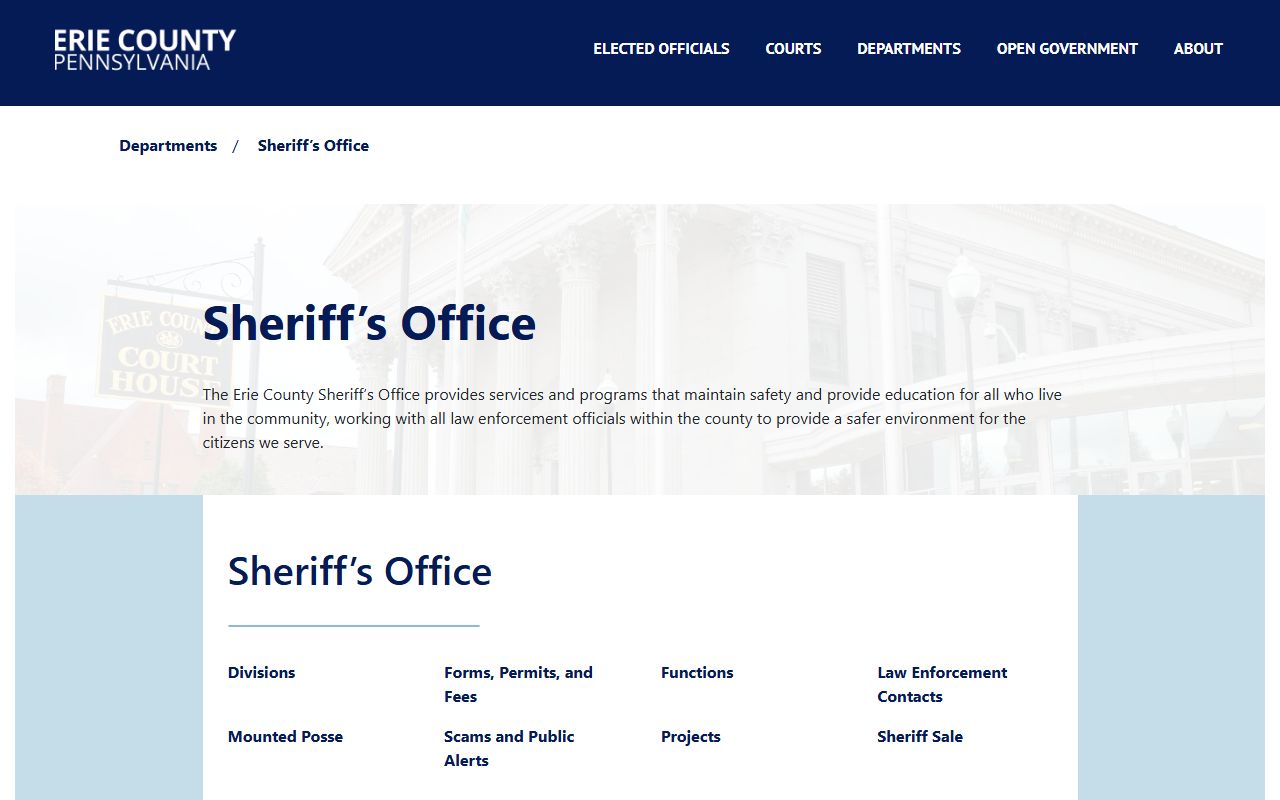
The office, led by Sheriff Chris Campanelli, gives 814-451-6007 as the number to verify any warrant claim.
Warrant Scam Warning
Erie County's Sheriff's Office has warned the public about a warrant phone scam. A caller using a false name has threatened arrest over a missed court date or contempt and demanded money to make it go away. That is fraud. The office does not work that way.
Important: The Erie County Sheriff's Office says it will never call asking for money to avoid arrest or a citation. Verify any warrant claim at 814-451-6007, and report fraud to the PA Attorney General at 1-800-441-2555.
Never pay a caller by gift card, wire transfer, or cash app to clear a warrant. No real court or sheriff collects a warrant payment that way over the phone. If a call feels urgent or threatening, hang up, then call the Sheriff's Office back at its published number to confirm. Scammers count on fear and speed, so slowing down and verifying through official channels is the strongest protection.
Types of Warrants in Erie County
Warrants come in several forms, and their public visibility varies. Some appear on dockets, while others stay sealed during an active investigation.
- Bench warrant - issued by a judge, often for a missed court date or contempt.
- Arrest warrant - issued in criminal cases; public visibility depends on case posture.
- Search warrant - may be sealed; the docket list includes sealed search warrant types.
- Fugitive or governor's warrant - used for out-of-county or out-of-state matters.
- Traffic or summary warrant - can follow a failure to respond to a citation.
UJS Warrant Docket Search Fields
The statewide UJS Case Search can surface warrant-related docket entries, but it is not a live warrant database. Use the fields below to find a case that may carry a warrant entry.
| Field Label | Type | Required | Notes / Format |
|---|---|---|---|
| Docket Number | Text | Optional | Use a known CP or MJ docket number |
| Participant Name | Text | Optional | Combine with Erie County and a docket type |
| Docket Type | Dropdown | Optional | Warrants, Search Warrant, Fugitive, and more |
| County | Dropdown | Conditional | Select Erie |
| Sheriff verification | Phone | n/a | 814-451-6007 |
A docket may read "bench warrant issued" or "bench warrant withdrawn," which tells you the current status if the case is public.
What a Warrant Record Shows
When a warrant entry is public on a docket, it usually carries a standard set of fields. Sealed warrants do not show until a court unseals them.
| Field | What It Shows |
|---|---|
| Docket Number | The case the warrant ties to |
| Issuing Court | Common Pleas or a magisterial district court |
| Warrant Type | Bench, arrest, search, or fugitive |
| Warrant Date | When the warrant issued |
| Status | Issued, served, or withdrawn |
| Bail Action | Any related bond entry |
Sealed Search Warrants
Some warrants are not public. The UJS docket type list includes sealed search warrants and sealed application categories. These stay out of public view until a court unseals them, which protects active investigations. A blank result for a warrant search does not prove no warrant exists.
Traffic and summary cases add another path. A failure to respond to a citation can lead to a warrant or a license suspension under 75 Pa.C.S. § 1533. For citation issues, see Erie County traffic court records.
Federal Warrants and the U.S. Attorney
Federal warrants are separate from county warrants. Erie County sits in the U.S. District Court for the Western District of Pennsylvania. The U.S. Attorney's Office for that district prosecutes federal crimes, from firearms and narcotics to fraud and public corruption.
The office publishes news and case information for the Western District.
You can review the U.S. Attorney for the Western District of Pennsylvania, which has highlighted Erie-area federal cases.

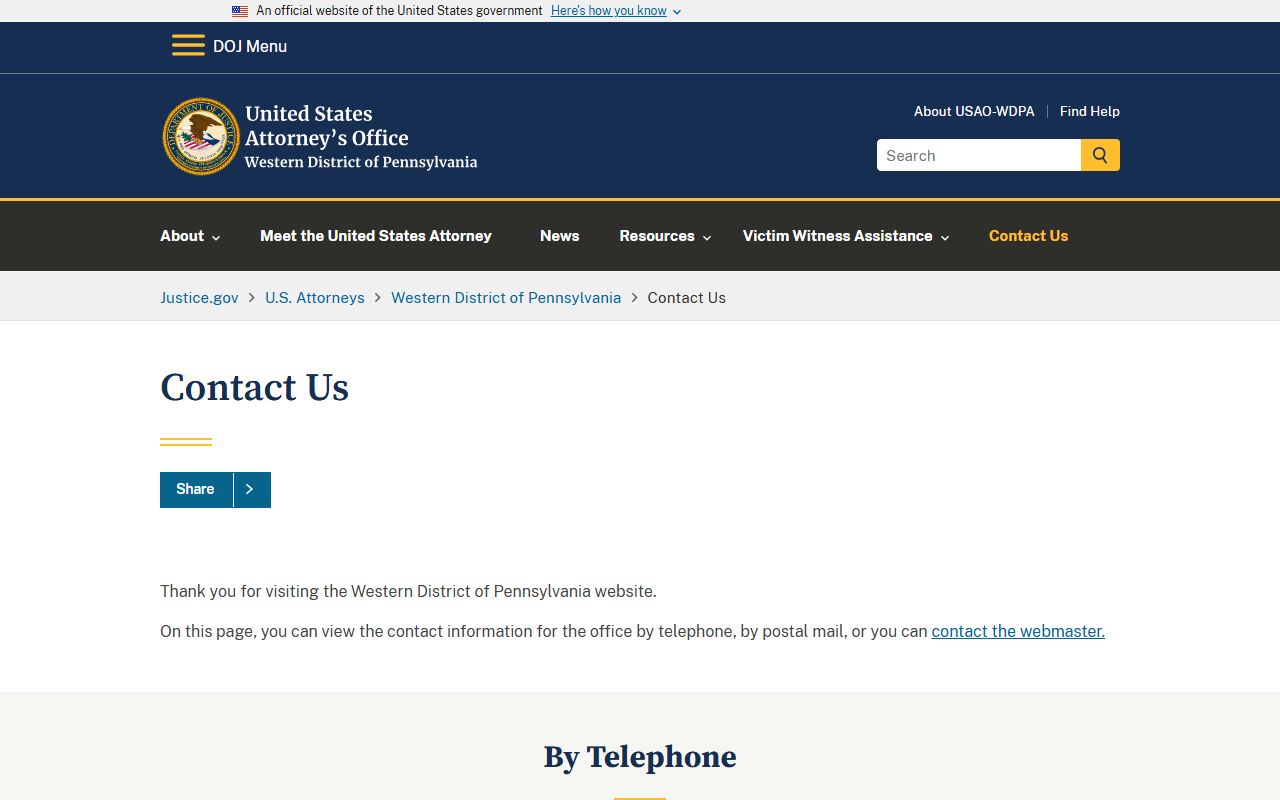
For local federal questions, the office lists Erie contact details on its directory.
The U.S. Attorney contact page includes Erie contact information for the Western District.
Federal matters do not appear on county dockets, so use federal channels for those.
How to Resolve an Outstanding Warrant
If you think a warrant is out for you, act through official channels, not a phone caller. The steps below help you handle it the safe way.
- Verify the warrant through the Sheriff at 814-451-6007 or the issuing court.
- Search UJS for the case and docket if you know the name or number.
- Contact an attorney or the Public Defender if criminal charges are involved.
- Ask where bail can be posted; the Clerk of Courts accepts bonds with a $16.50 filing fee.
- Appear as directed, since missing another date can add more warrants.
For booking and bond questions, see inmate records. For the criminal clerk and bail process, see the Clerk of Courts.
If you cannot afford a lawyer for a criminal matter tied to a warrant, the Erie County Public Defender represents people who qualify at no charge. The office is at 210 E. Second St., Erie, PA 16507, and it takes applications weekdays from 8:00 a.m. to 4:00 p.m. or by mail. Eligibility runs on federal poverty guidelines, and applicants should bring or send copies of the charges and income verification. Acting quickly matters, because a warrant left open can lead to more charges, higher bond, or a license hold on a traffic matter.
What Happens After an Erie County Warrant Is Served
A served warrant usually leads to booking and a first court appearance. In Erie County, a person taken into custody may go to the Erie County Prison or appear before a magisterial district judge for a preliminary arraignment and bail. Early criminal processing can include the complaint, arrest and booking, fingerprinting and a photograph, a medical screening, and a bail or commitment decision. The court schedule follows from there.
The docket tracks each step in the public record. A criminal docket on the UJS portal may show the OTN, the charges, the bail action, the case status, the preliminary hearing, and whether the case was held for court. For the bond amount and policy on someone already in custody, the Erie County Prison information line at 814-451-7500 is the official source. The Sheriff's Office handles the enforcement and transport side, while the court sets bail and the hearing dates.
Bench Warrants and Failure to Appear
A bench warrant is the warrant most Erie County residents run into. A judge issues it when a person misses a court date, ignores a court order, or is held in contempt. The court docket usually records the event as "bench warrant issued," and a later entry may read "bench warrant withdrawn" once the person appears or the matter is resolved. Because the docket carries these entries, the statewide UJS portal is a practical first check when you know the name or docket number.
Traffic and summary cases create their own warrant and license risk. A failure to respond to a citation, or a failure to pay fines and costs, can trigger a warrant or a license suspension under 75 Pa.C.S. § 1533. Acting early on a citation is far easier than clearing a warrant later. For citation handling, the magisterial district court named on the docket is the office to contact.
Why a Warrant Search May Show Nothing
A clean search result is not proof that no warrant exists. Several things can hide a warrant from public view. The most common reasons are listed below, and each is a normal part of how Pennsylvania handles warrant records.
- The warrant is sealed during an active investigation.
- The case is juvenile, expunged, or under limited access.
- The portal lists docket events, not a live, real-time warrant feed.
- The name was spelled differently than the court filing.
- The matter is federal, which does not appear on county dockets.
When a search comes up empty and you still have a concern, the safe move is to call the Sheriff's verification line or the issuing court directly. Do not rely on a private warrant-lookup website, and never act on a phone caller demanding payment.