
What an Erie County Court Docket Shows
A docket sheet is the official record of what has happened in a case. It is not the full file. It lists each event in date order: complaint filed, hearing set, plea entered, warrant issued, sentence imposed, appeal filed. The docket is a map of the case, while the documents behind it stay with the court office.
Erie County dockets come in two main forms. Common Pleas dockets cover felony, misdemeanor, and major civil matters. Magisterial district dockets cover traffic, summary, small civil, and landlord-tenant cases. Both are searchable on the statewide portal, with limits set by law.
You can search public dockets free on the Pennsylvania UJS portal, which lists docket sheets for every county including Erie.
Common Pleas Dockets in Erie County
The Court of Common Pleas is Erie County's trial court of general jurisdiction. Its dockets cover criminal cases held for court, civil actions, family matters, and Orphans' Court filings. Criminal Common Pleas dockets are public on the UJS portal. Many civil Common Pleas dockets, though, are limited online and point users to the county Prothonotary instead.
For Erie civil cases, the county moved to CourtPro in 2024. If a civil docket does not show on the statewide name search, check the Erie County court records page for the CourtPro route or contact the Prothonotary.
Orphans' Court matters, such as estates and guardianships, also produce dockets within the Court of Common Pleas. Those records route mostly through the Register of Wills and Clerk of Orphans' Court rather than the statewide portal, so the Orphans' Court page is the better starting point for probate dockets.
Magisterial District Court Dockets
Magisterial district judges, or MDJs, run Pennsylvania's lower courts. In Erie County, MDJs handle traffic citations, non-traffic summary cases, landlord-tenant disputes, smaller civil claims, and the first steps of criminal cases. Their docket sheets are public on the UJS MDJ docket search, and many cases stay at this level unless appealed.
Erie County lists every MDJ office, judge, address, and phone on its court site.
The county posts each office on the Erie County MDJ list, which maps districts to wards, boroughs, and townships.
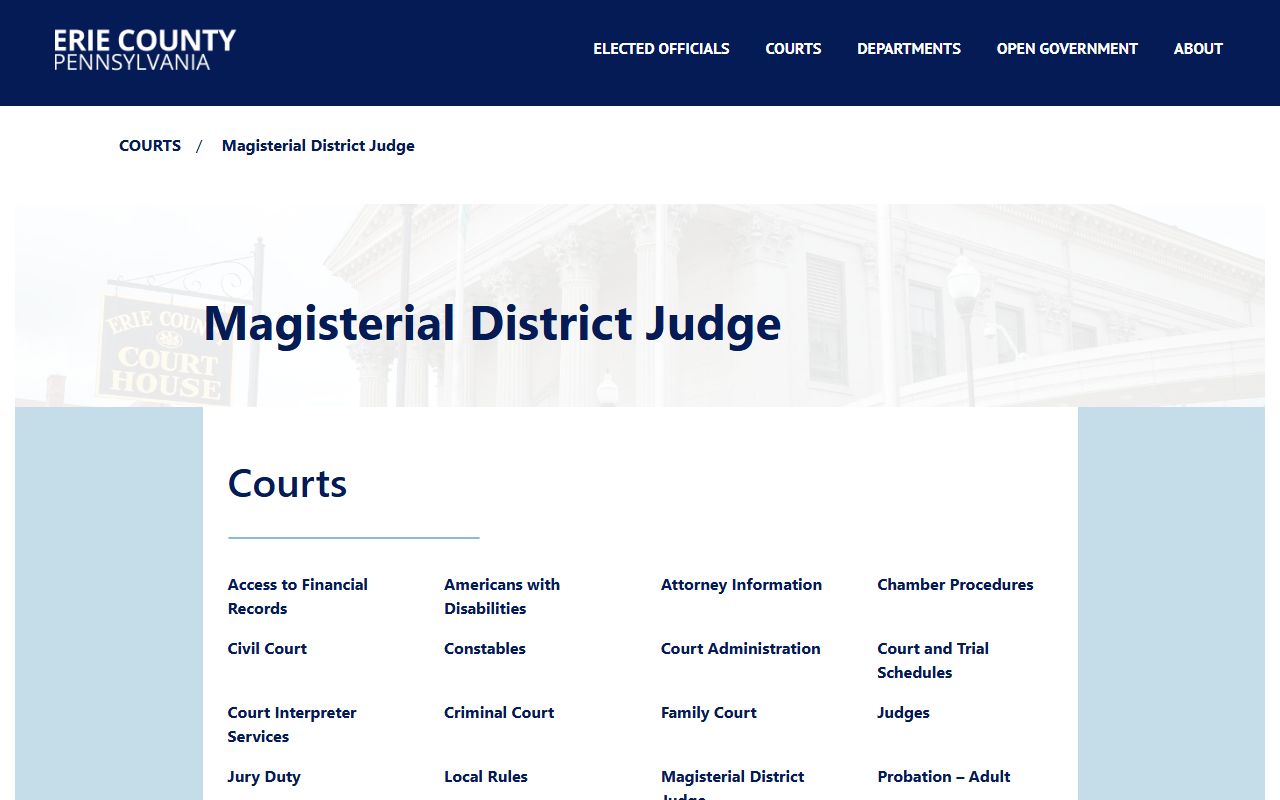
The office number on a docket, such as 06-1-02 or 06-3-05, tells you which judge and counter handle the case.
Erie County Docket Number Formats
Docket numbers tell you the court level at a glance. CP marks the Court of Common Pleas. MJ marks a magisterial district court. Erie County's judicial district code is 06. Appellate cases use a different format with letters and a year.
| Format | Court | Example Pattern |
|---|---|---|
| CP-06-CR | Common Pleas criminal | CP-06-CR-number-year |
| MJ-06...-TR | Magisterial traffic | MJ-(office)-TR-number-year |
| MJ-06...-NT | Magisterial non-traffic | MJ-(office)-NT-number-year |
| #### WDA year | Superior Court appeal | Western district appellate docket |
WDA stands for a Superior Court western-district appeal, which is the common path for Erie County appeals.
Hearing and Disposition Fields on a Docket
Docket sheets share a common set of fields, with extra fields by case type. The list below shows what a typical Erie County docket sheet records.
| Field | What It Shows |
|---|---|
| Caption | The case title and parties |
| Case Status | Active, closed, inactive, or adjudicated |
| Charges / Statute | Offense title, section, and grade for criminal cases |
| OTN | The offense tracking number in criminal cases |
| Events | Hearings, continuances, pleas, and orders |
| Disposition | The result of each charge or claim |
| Financial | Fines, costs, restitution, and balance |
Note: Public docket sheets usually show docket text and events, not downloadable copies of the filed pleadings.
Warrant and Event Entries
Dockets record warrants as events. A line may read "bench warrant issued" or "bench warrant withdrawn." Other entries track key steps: complaint filed, summons issued, hearing scheduled, waived for court, held for court, sentence imposed, judgment entered, appeal filed.
A bench warrant often follows a missed court date. If you see one on a docket, contact the issuing court right away. For warrant verification and the local scam warning, see Erie County warrant records.
How to Read an Erie County Docket Sheet
A docket sheet packs a lot into a small space, but it follows a steady order. The top holds the header information: the docket number, the court, the county, the case caption, the filing date, and the case status. Criminal dockets add the OTN and the judge or magisterial district judge. Below the header, the party section lists each participant and role, such as Commonwealth, defendant, plaintiff, landlord, or tenant, along with any attorney and bar number.
The middle and lower parts of the sheet carry the case detail. For a criminal case, that means charges, statute, grade, plea, bail action, and sentence. For a civil or landlord-tenant case, it means the claim amount, the judgment, and any satisfaction. Reading a docket is easier when you take it in order.
- Confirm the docket number and court so you have the right case.
- Check the case status to see whether it is active, closed, or adjudicated.
- Read the charges or claims and their grade or amount.
- Follow the events in date order, from filing to disposition.
- Note any financial line, such as fines, costs, or restitution.
If you need a stamped or certified copy of anything behind the docket, contact the custodian: the Clerk of Courts for criminal cases or the Prothonotary for civil cases.
Common Pleas Docket Types in Erie County
The Court of Common Pleas keeps several kinds of dockets, and the docket type tells you what the case is about. Knowing the type helps you filter a search and read the result. Criminal dockets cover felony and misdemeanor cases held for court. Civil dockets cover lawsuits, judgments, appeals from magisterial decisions, and arbitration appeals. Summary Appeal dockets carry appeals from magisterial summary convictions, including traffic. Orphans' Court dockets cover estates, guardianships, and related probate matters. The Miscellaneous category holds road dockets, liquor board matters, warrants, and other special filings.
Some docket types are restricted by law. Juvenile, dependency, delinquency, and mental health commitment dockets do not behave like ordinary public cases. The portal may not return them at all, since state law keeps them confidential. Landlord-tenant matters often start at the magisterial level, but appeal activity can reach Common Pleas.
Erie County Docket Entry Glossary
Docket entries use short, repeated phrases. Once you know the common ones, a docket reads quickly. The terms below show up across Erie County criminal and civil dockets.
- Complaint
- The document that starts many criminal, civil, or magisterial cases.
- Information
- The formal charging document in a Common Pleas criminal case.
- Held for court
- A magisterial finding that sends a criminal case up to Common Pleas.
- Waived for court
- The defendant gave up the preliminary hearing and the case moves up.
- Disposition
- The result of a charge, such as guilty, dismissed, or withdrawn.
- Bench warrant
- A warrant a judge issues, often after a missed court date.
A single case can show dozens of these entries, listed in date order from filing to disposition.
How Erie County Magisterial Districts Are Mapped
Erie County spreads its magisterial district courts across the whole county. The districts follow city wards, Millcreek voting districts, boroughs, and rural townships. That means the right office depends on where the case arose. Offices sit in East Springfield, McKean, Millcreek, central and east Erie, Harborcreek and Lawrence Park, North East, the Summit and Waterford area, and Corry, plus several Erie city offices on West 12th Street, Parade Street, West 38th Street, and East 38th Street.
The office number on a docket points you to the right judge and counter. To match a number such as 06-1-02 or 06-3-08 to an address and phone, use the full magisterial table on the Court of Common Pleas page.
Free Docket Tools and Search Filters
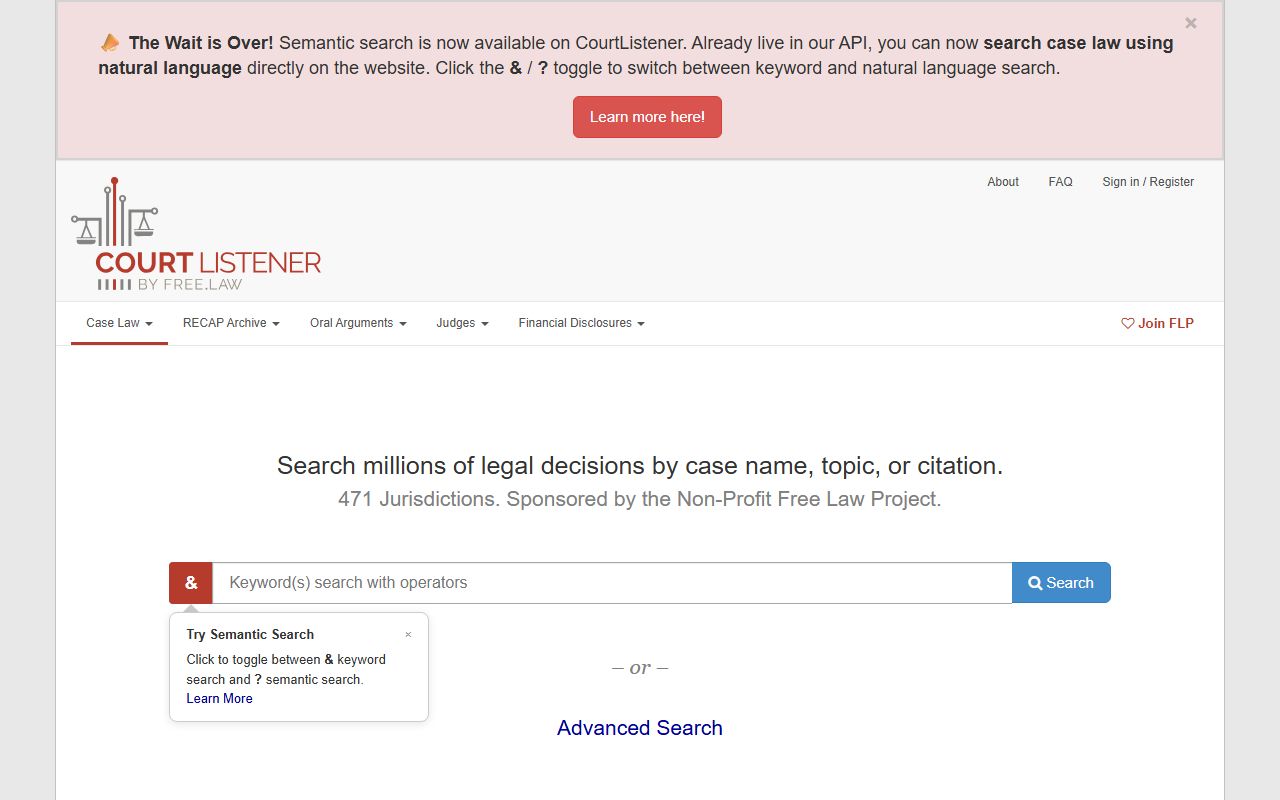
The UJS portal is the official source for Pennsylvania dockets. For federal cases, which are separate, free mirrors can help. CourtListener and its RECAP archive hold many federal dockets and documents at no cost.
The CourtListener and RECAP archive is useful for federal Western District of Pennsylvania dockets that touch Erie.
For state cases, narrow your UJS search by Erie County, judicial district 06, docket type, and date range to cut down on false hits.
Federal cases that touch Erie County are filed in the U.S. District Court for the Western District of Pennsylvania, which keeps an Erie courthouse at 17 South Park Row. Those dockets live on PACER, the federal court records service, while the federal bankruptcy court runs its own CM/ECF system. The Third Circuit Court of Appeals hears appeals from the district. None of these federal dockets show on the state UJS portal, so use the federal tools for any federal matter. For a wider look at federal records and bankruptcy access, see Erie County public records.