
How to Search Erie County Court Records
Pennsylvania splits its court records by custodian. The Prothonotary keeps civil and family files. The Clerk of Courts keeps criminal files. The statewide Unified Judicial System (UJS) portal lists public dockets for criminal, traffic, and magisterial cases. Erie County's CourtPro system lists Prothonotary civil records after the 2024 switch. Pick your track before you type a name.
You need a few details first. A full name works for a broad search. A docket number, citation number, or OTN gives an exact hit. The UJS Case Search portal is the main public tool for criminal and traffic dockets.
The state runs the public docket search at UJS Case Search, which covers Common Pleas, magisterial, and appellate cases.
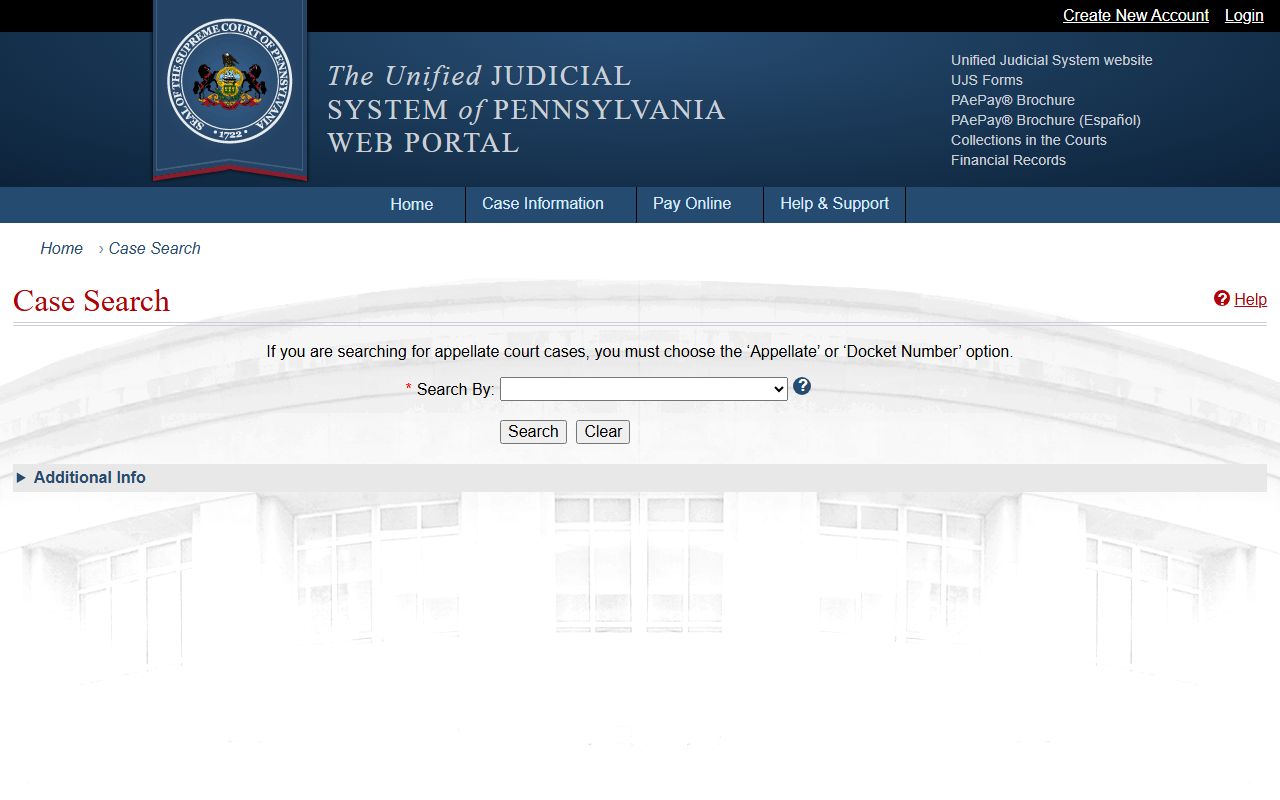
That portal is free and does not require an account for public docket searching.
- Open UJS Case Search and choose a "Search By" mode.
- Enter a docket number, citation, OTN, or participant name.
- Narrow by County (Erie) or Judicial District (Erie - 06).
- Open the matching docket sheet to read parties, charges, and disposition.
- For civil cases, switch to CourtPro or contact the Prothonotary in Room 120.
Erie County Court Records Search Fields
The portal shows different fields based on the search mode. Some fields are required only in certain modes. The table lists the fields that matter most for an Erie County search.
| Field Label | Type | Required | Notes / Format |
|---|---|---|---|
| Search By | Dropdown | Yes | Docket Number, Participant Name, Citation Number, OTN, Date Filed |
| Docket Number | Text | If docket mode | CP for Common Pleas, MJ for magisterial |
| Citation Number | Text | If citation mode | Include the dash, like A5368532-1 |
| Participant Name | Text | If name mode | Add filters to narrow results |
| County | Dropdown | Conditional | Select Erie |
| Judicial District | Dropdown | Conditional | Select Erie - 06 |
| Docket Type | Dropdown | Conditional | Criminal, Civil, Traffic, Summary Appeal, and more |
| Case Status | Dropdown | Conditional | Active, Closed, Inactive, Adjudicated |
Note: The portal warns that juvenile, expunged, limited-access, and many Common Pleas civil cases may not appear in public results.
CourtPro and Erie County Civil Records
Erie County moved its civil records to CourtPro on April 15, 2024. The county stopped adding filings to the old INFOCON system after April 12, 2024. CourtPro is the Prothonotary's case-management, viewer, and e-filing system. It is not the same as the statewide UJS portal.
The CourtPro landing page redirects to the Prothonotary viewer and login.
You can reach the system through the Erie County CourtPro landing page, which routes to the civil record viewer.
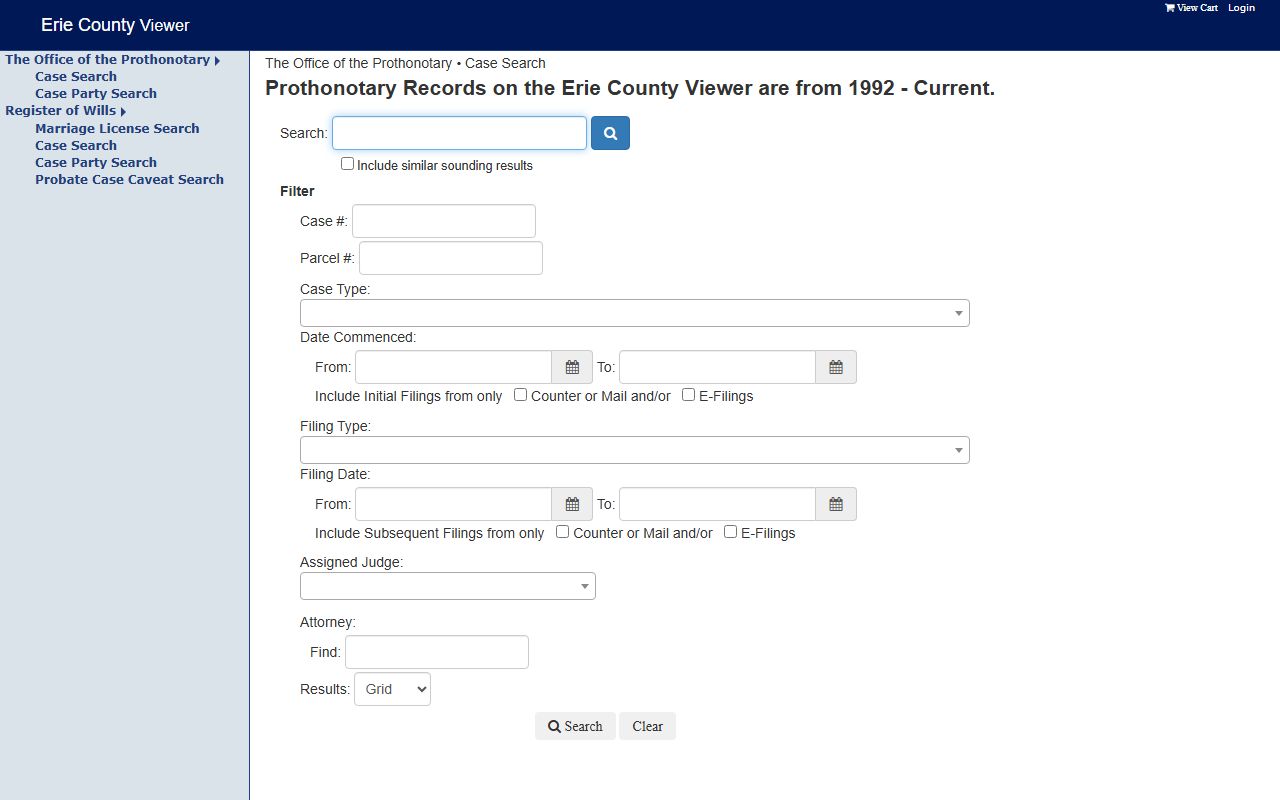
The login screen asks only for a user name on the first step, and it offers a guest option for public viewing.
The CourtPro login page shows the user name field, a remember-me box, and a continue-as-guest link.
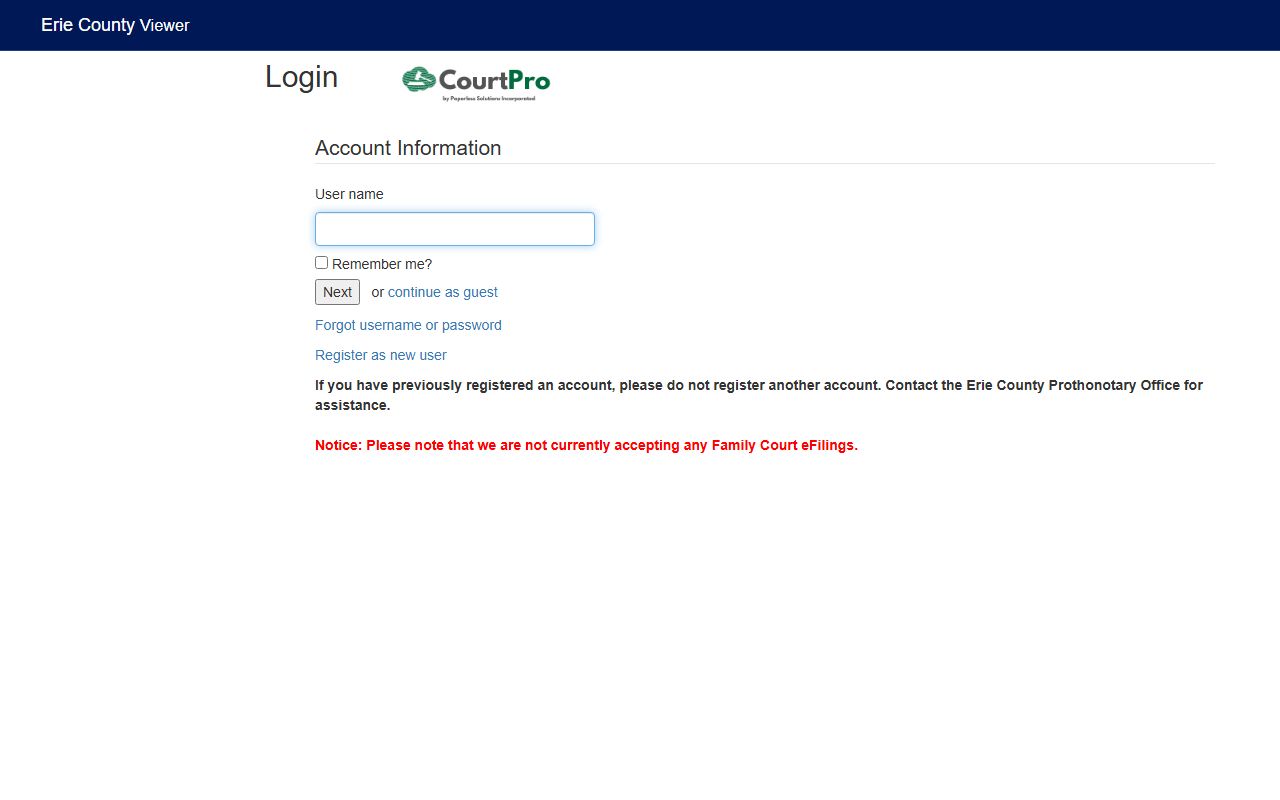
Registered accounts unlock e-filing, but the guest link lets the public view available civil docket information. The login page also notes that Erie County is not currently accepting Family Court e-filings.
Types of Erie County Court Records
Court records in Erie County fall into a few main groups. The Clerk of Courts holds criminal files. The Prothonotary holds civil and family files. Magisterial district courts hold most traffic and small claims. The list below covers the main types.
The Prothonotary page describes the civil records it keeps, from lawsuits to judgments and liens.
You can review the office at the Erie County Prothonotary page, which lists civil record types and forms.
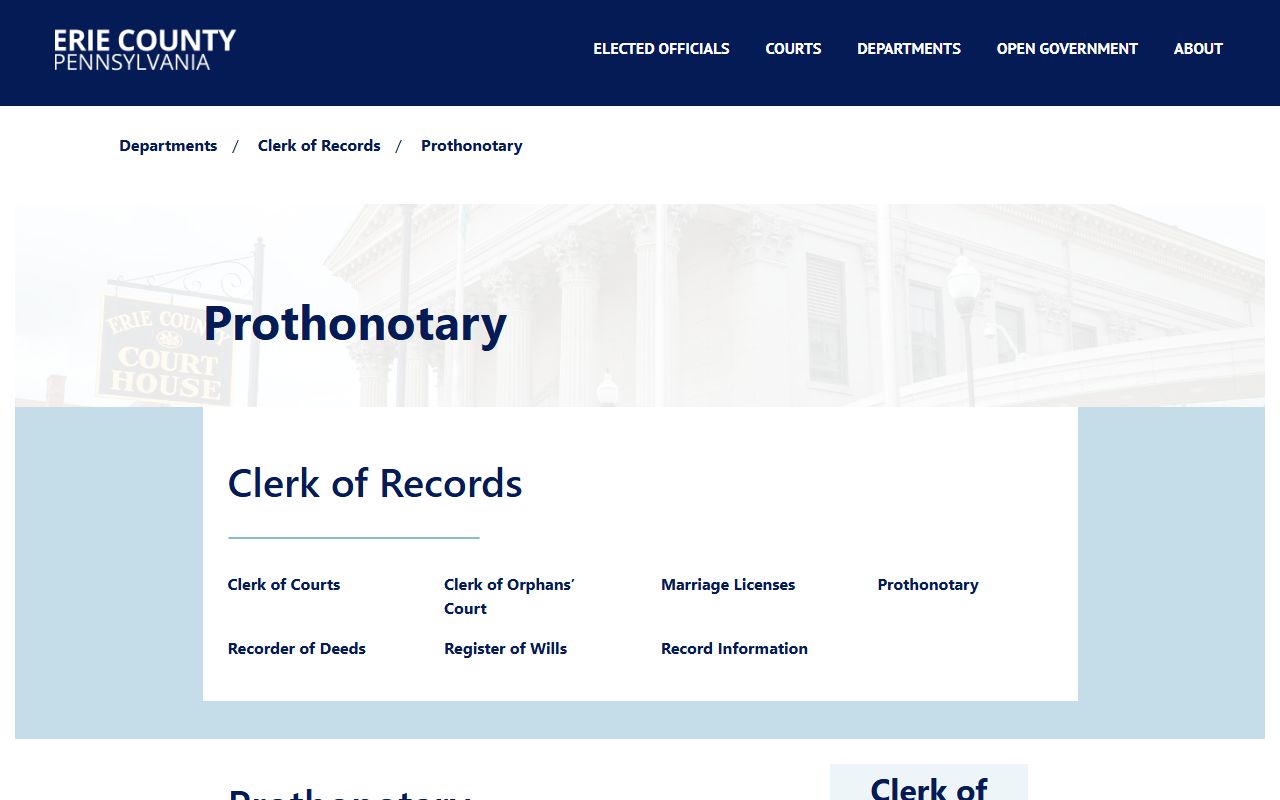
That page is the anchor for civil court records, while criminal records route through the Clerk of Courts.
- Criminal cases - felony and misdemeanor files at the Clerk of Courts.
- Civil cases - lawsuits, judgments, liens, and name changes at the Prothonotary.
- Family cases - divorce, custody, and PFA files, with limits on public access.
- Traffic and summary cases - mostly magisterial district court records.
What Erie County Court Records Show
A docket sheet is a running summary of a case. It does not always carry the underlying PDFs. For full documents, you contact the custodian. The fields below are typical for an Erie County docket.
| Field | What It Shows |
|---|---|
| Docket Number | CP, MJ, or appellate format that identifies the case |
| Filing Date | When the case or charge was filed |
| Parties | Commonwealth, plaintiff, defendant, petitioner, or respondent |
| Charges / Claims | Statute and grade for criminal, claim amount for civil |
| Events | Hearings, continuances, warrants, and orders |
| Disposition | The current or final outcome of the case |
Some fields are hidden by law. SSNs, minors' names, financial account numbers, and abuse-victim contact details are redacted or filed under confidential rules.
Public Access Framework for Erie County Court Records
Court records follow the Unified Judicial System's Case Records Public Access Policy, set out in 204 Pa. Code § 213.81. The policy makes many dockets public while protecting confidential information and documents. County agency records, by contrast, use the Right-to-Know Law, which is a separate path.
Anyone can search public dockets. There is no need to show a reason or ID for an online docket search. For a staff-run search at the office, the Clerk of Records charges $20. You can search the office records yourself for free.
Note: Court dockets and a state police criminal-history report are different records, drawn from different systems, even when they cover the same person.
Records That Are Sealed or Confidential in Erie County
Some cases are not open to the public. Juvenile files are restricted under 42 Pa.C.S. § 6307. Adoption records are sealed. Expunged and limited-access criminal cases drop from public results. Mental health commitment records are confidential. A blank result can mean the case is restricted, not that it never existed.
To view a sealed record, a person usually needs a court order. For expungement or limited access, the Clerk of Courts lists the petition forms. The sealing process is handled through the criminal court, not by a simple counter request.
In-Person Court Record Requests
You can search records in person at the courthouse. Civil files are in the Prothonotary office, Room 120. Bring the case number or party names. Staff can run a search for a fee, or you can search the public records yourself at no charge.
Erie County Prothonotary
140 West Sixth Street, Room 120
Erie, PA 16501
814-451-6250
Mon-Fri, business hours
What You Can See Online and What Needs an Office Copy
One phrase trips up a lot of searchers: "public" does not mean "online." Many Erie County court records are public, yet they are only available by in-person search, an office request, or a paid certified copy. The statewide docket portal shows the event history of a case, including parties, charges, hearings, and disposition. It usually does not give you the underlying documents. For the actual pleadings, orders, or a stamped copy, you go to the office that holds the file. On the civil side, document viewing and copying run through CourtPro and the Prothonotary. On the criminal side, copies come from the Clerk of Courts. That split is the single most useful thing to understand before you start.
Fees follow the same office-by-office logic. There is no one price that covers every certified copy. The county does publish a few set amounts, and the rest come from each office's own schedule.
| Service | Fee |
|---|---|
| Search records yourself in the office | Free |
| Staff-conducted search (Clerk of Records) | $20 |
| Adult criminal record search (Clerk of Courts) | $10 |
| Certified marriage record | $5 |
Note: Certified copies for civil, criminal, probate, and marriage records each come from a different office, so confirm the exact fee and payment method with that office first.
Older and Historical Erie County Court Records
Erie County's records reach back further than most online tools show. Probate files date to 1823, and marriage records to 1885, both held through the Clerk of Records. The county's civil case system, though, changed in 2024. On April 15, 2024, the Prothonotary moved to CourtPro, and the older INFOCON system stopped taking new filings after April 12, 2024. If an older civil, divorce, judgment, or lien matter looks missing from a prior search method, that is often a system change, not a dismissal. Check CourtPro or call the Prothonotary in Room 120 before you assume the case was closed or sealed.
A blank search result has many possible causes. It rarely means "no case." Common reasons a record does not appear include the ones below.
- A spelling difference between your search and the filed name.
- The case is in a different court or county than you searched.
- The record is sealed, expunged, or under limited access.
- The matter is juvenile, adoption, or mental health and is confidential.
- It is an older local-only record not loaded into the online portal.
- It is a Common Pleas civil case the statewide portal does not display.